The Trig painter

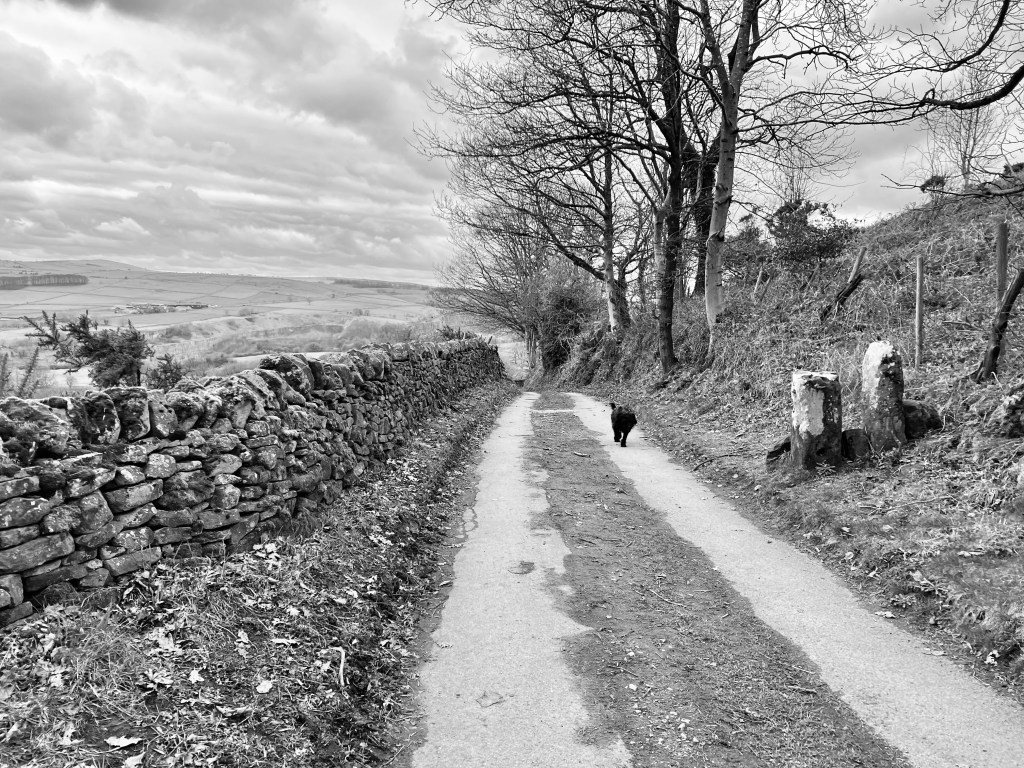
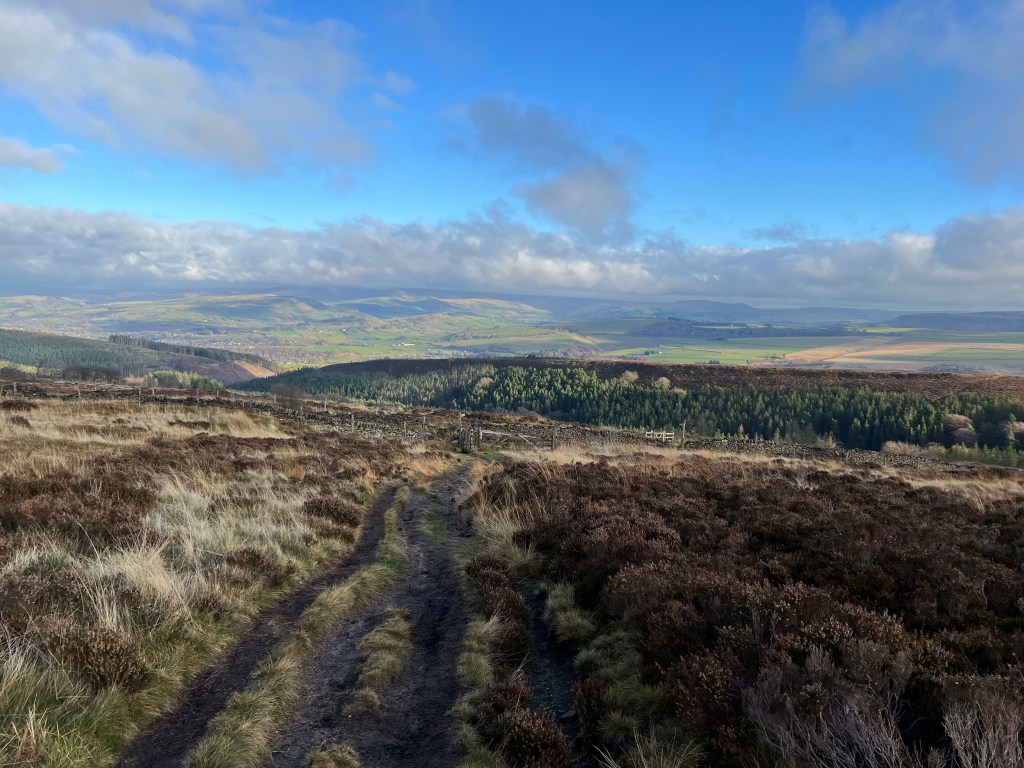
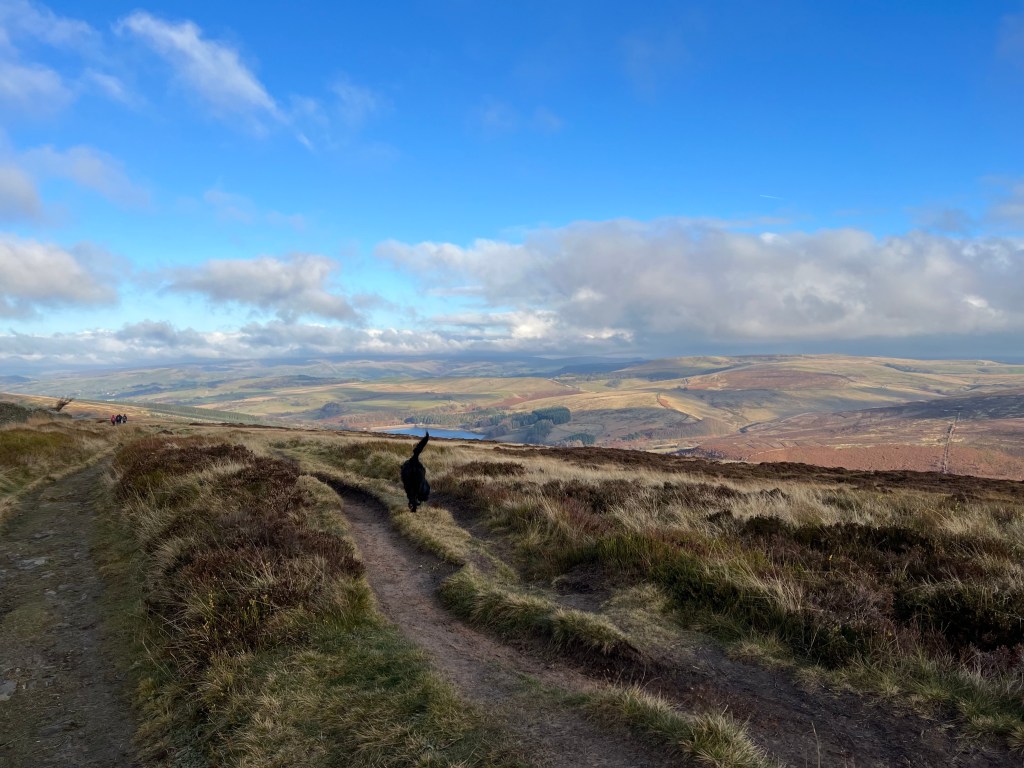
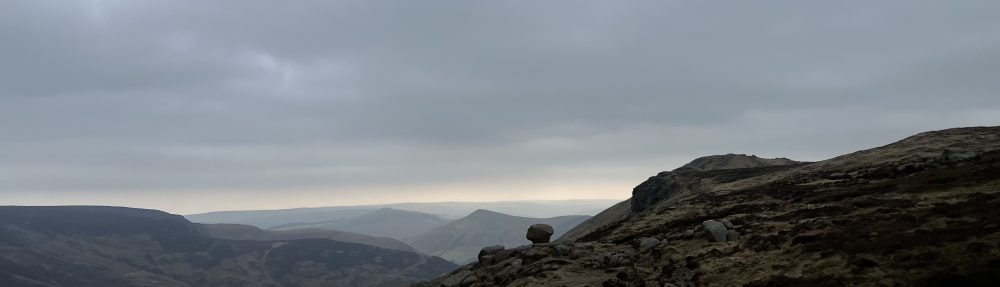
Up on the aptly named Big Moor earlier doing a loop around Peak Edges; White, Curbar and Froggat. As always, breathtaking scenery, vast sky and the freedom of the ban on dogs off leads lifted as we head into Autumn. I mean every which way you look, dazzling views.
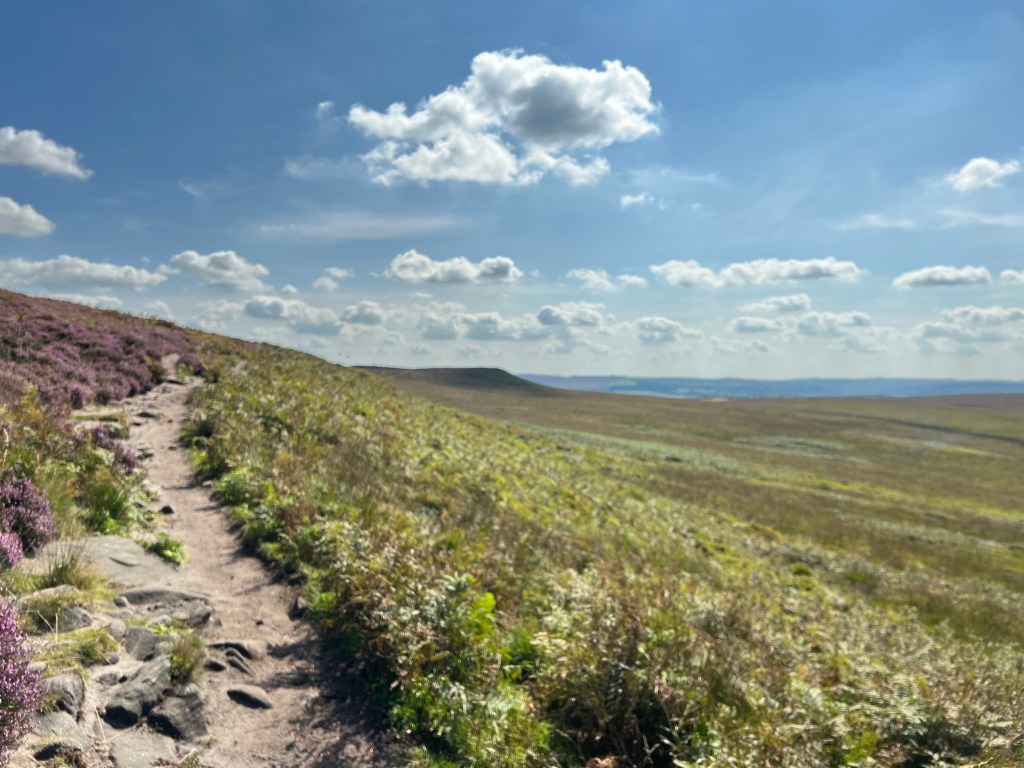
We approached the trig point on White Edge.

“Wow, there’s the guy that paints trigs! I read about him on Facebook yesterday.”

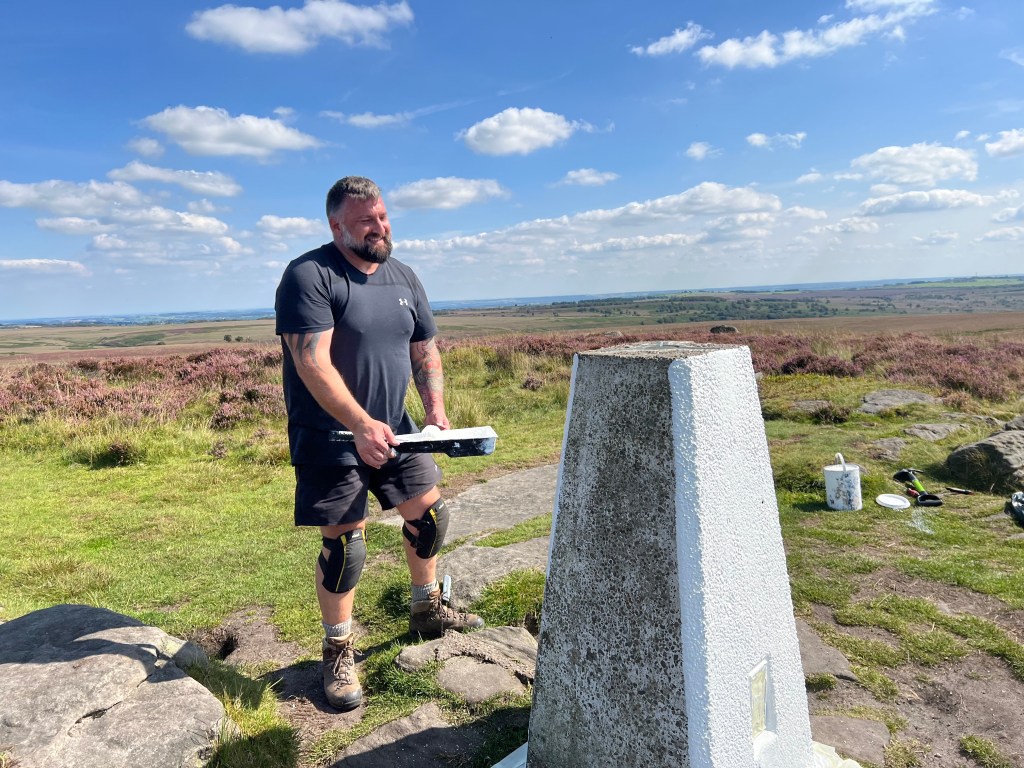
And there he was. Paint tin, masking tape, paint tray, roller and an almost brilliantly white trig.

The story? He began painting trigs during lockdown. After being stopped by police picking up litter about 1am in his home town and questioned about what he was doing (ridding the streets of empty beer cans), he decided to go up to nearby Bleaklow and start tidying up there. The dullish grey trig caught his attention because it had been white when he was a boy. He decided to paint it.
Someone came along and said there was another one that needed doing a couple of miles away. He thought he’d better find out who owns them before he painted any more. He contacted the Ordnance Survey bods who said if you want to paint them, crack on.

A serious illness and bereavement set him back several months, now he’s back on the job at weekends, lugging all the equipment despite ongoing pain. Chatting and joking with walkers alongside doing a careful paint job.

‘What’s your favourite trig?’

‘Kinder,’ he said without missing a beat. ‘Although if you’re local, it’s this one.’

Peak legend.
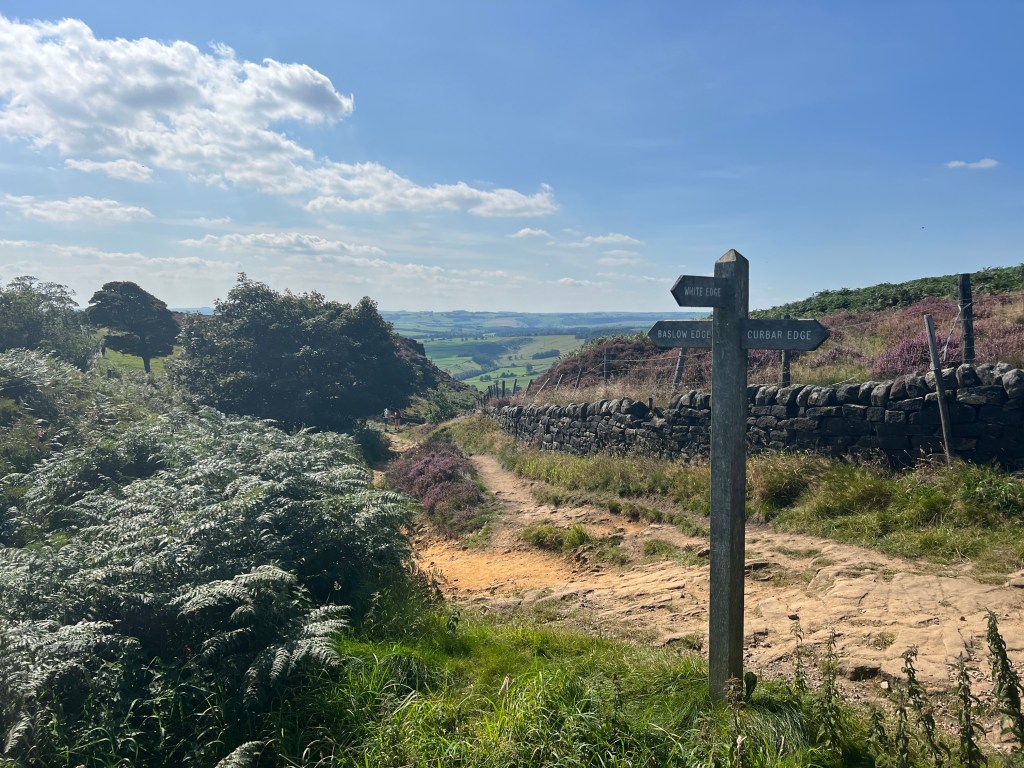
Practicalities: 6 mile loop, good dog walking on first half (before the drop becomes sheer at Curbar, terrifyingly so), not too much of a climb (park in Haywood National Trust car park or the car park at Curbar Edge which has a handy coffee and ice-cream van). Grouse Inn pub grub well worth a swerve, the Curbar section of the walk is popular at weekends.
Flat Stanley, Thor and the Peak crowds

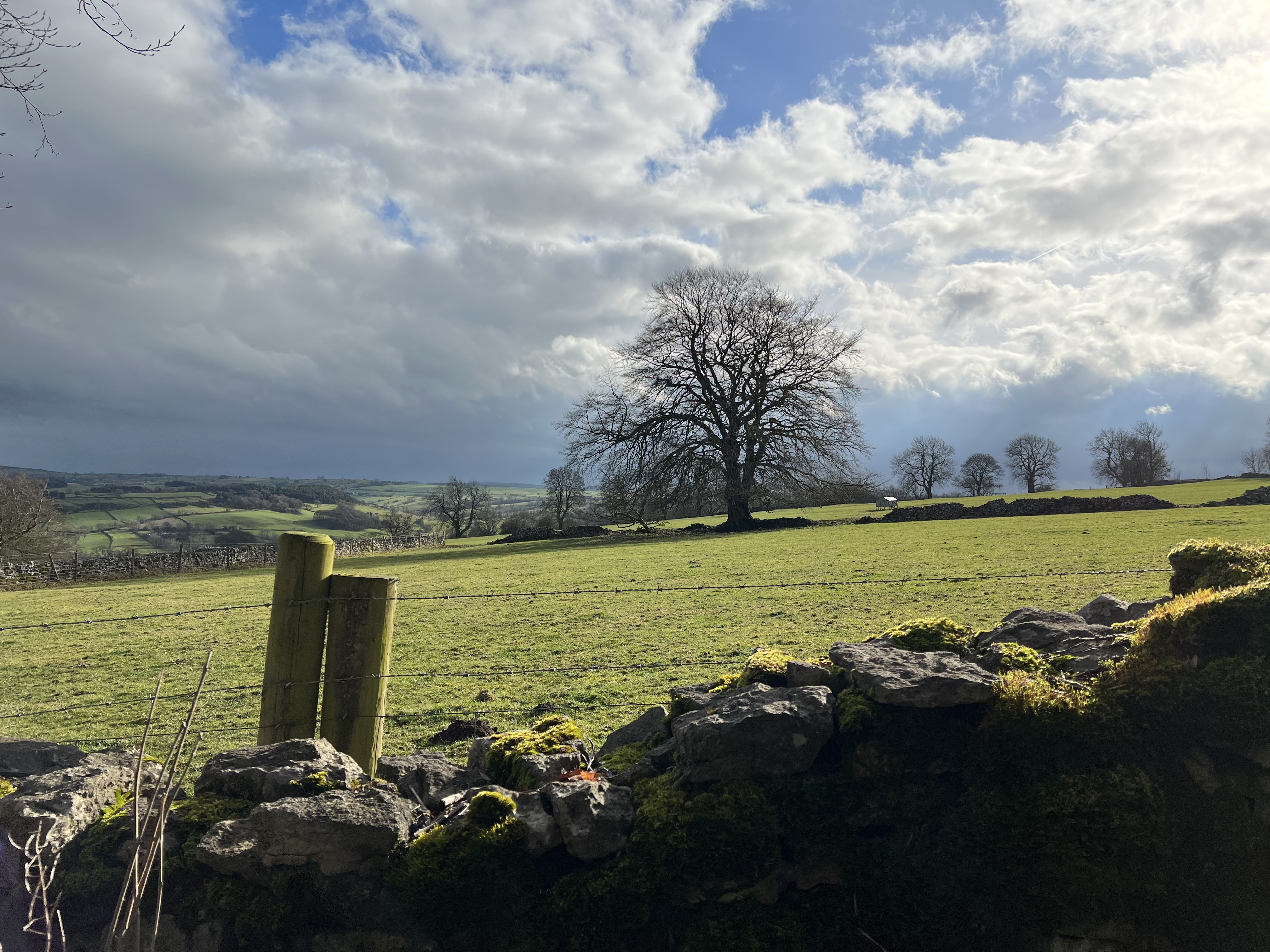
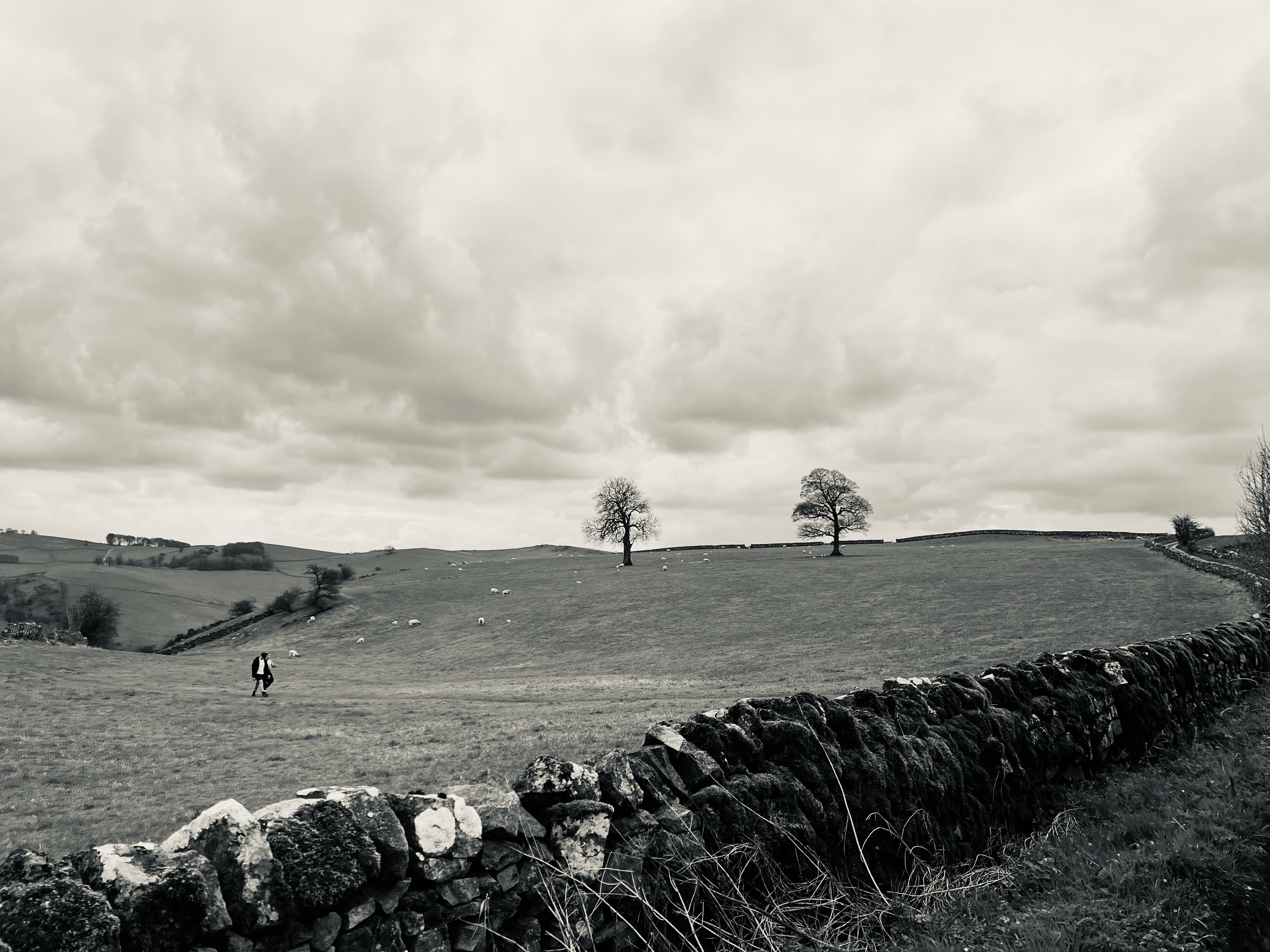
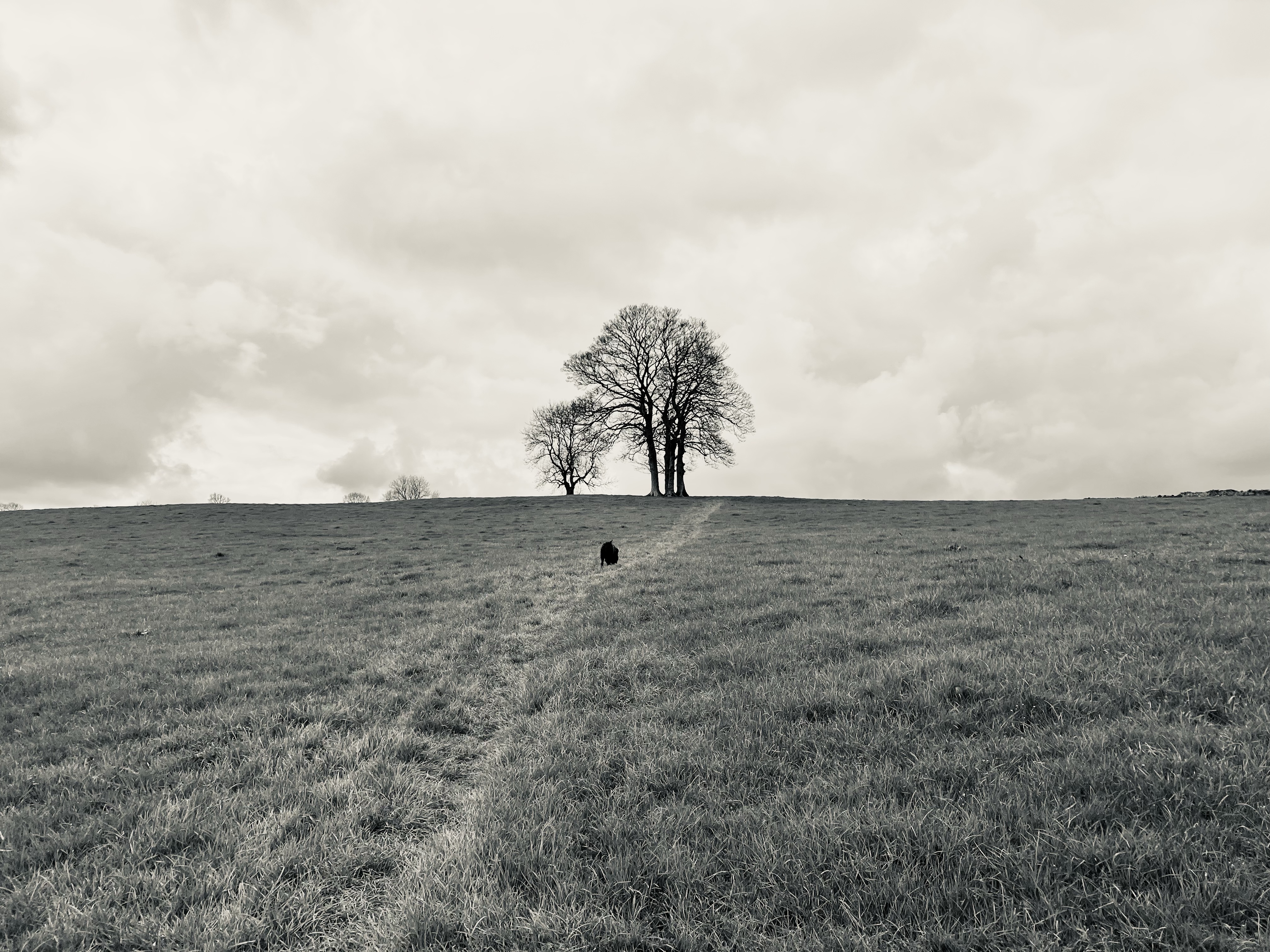
Headed to unexplored Peak terrain about seven miles from Buxton. Hartington and Hulme End tipping into Staffs. The scenery is stunning, (iphone camera flattens hills and erases immense space, though not sheep and lamb action).
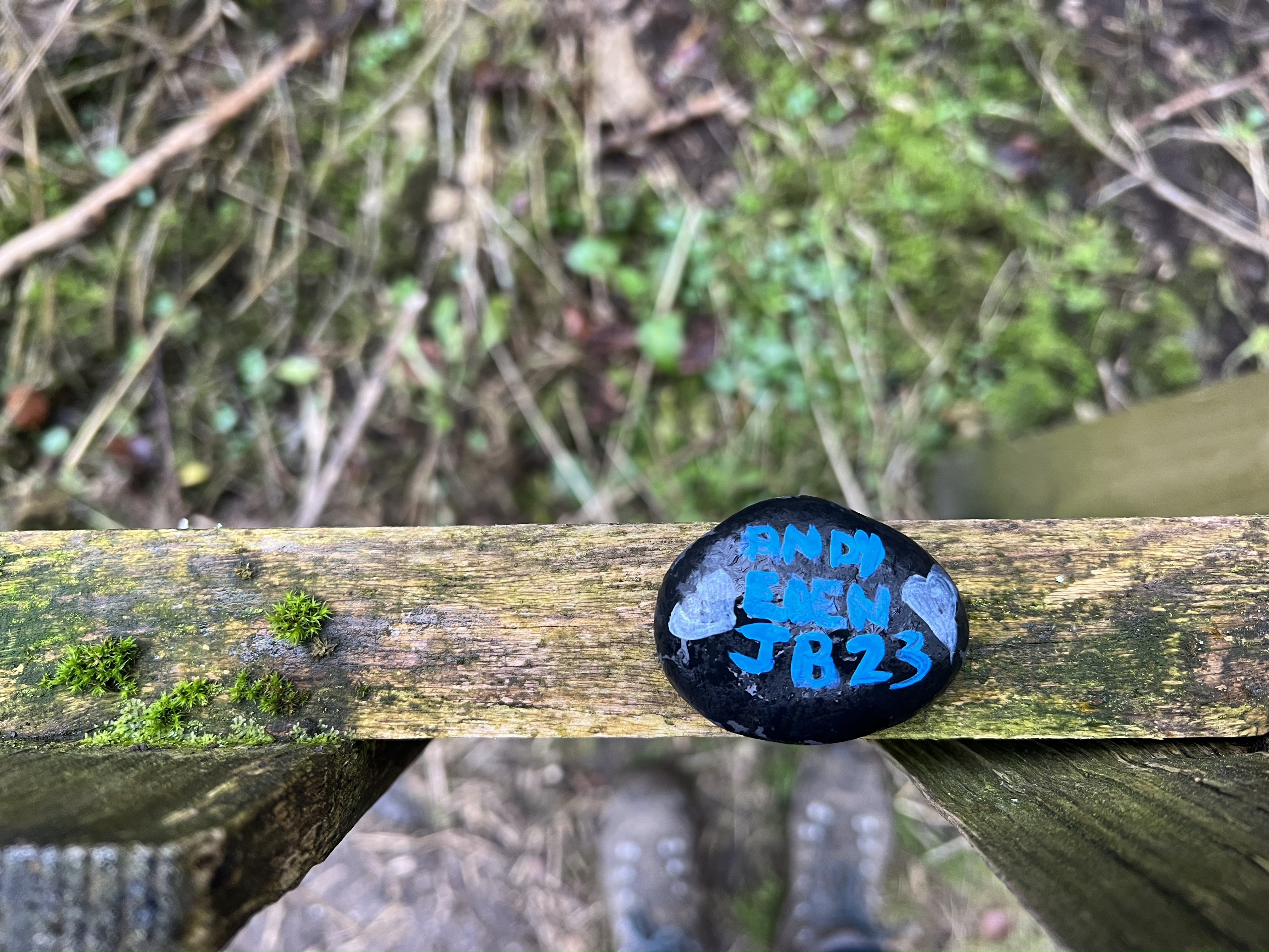
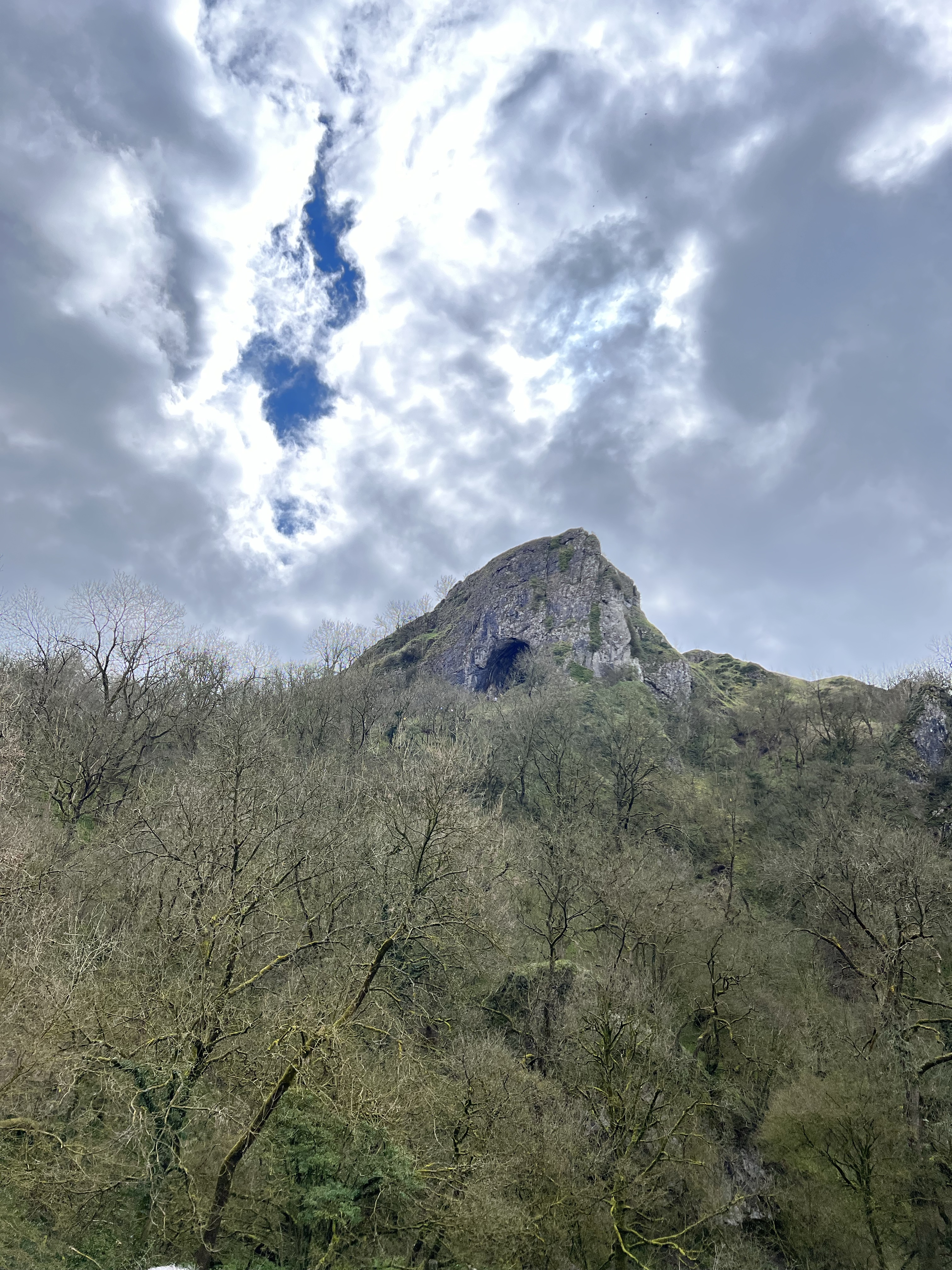
We set off for a loop around Wetton taking in Thor’s Cave. These outings are haunted by memories of a family holiday to this area around 45 years ago. Me old dad having a dip in every river deep enough before wild swimming was a thing, us kids clambering along on a shingle path high up in Dovedale being shouted at to lean into the hillside and not look down, and visiting a cave or two.

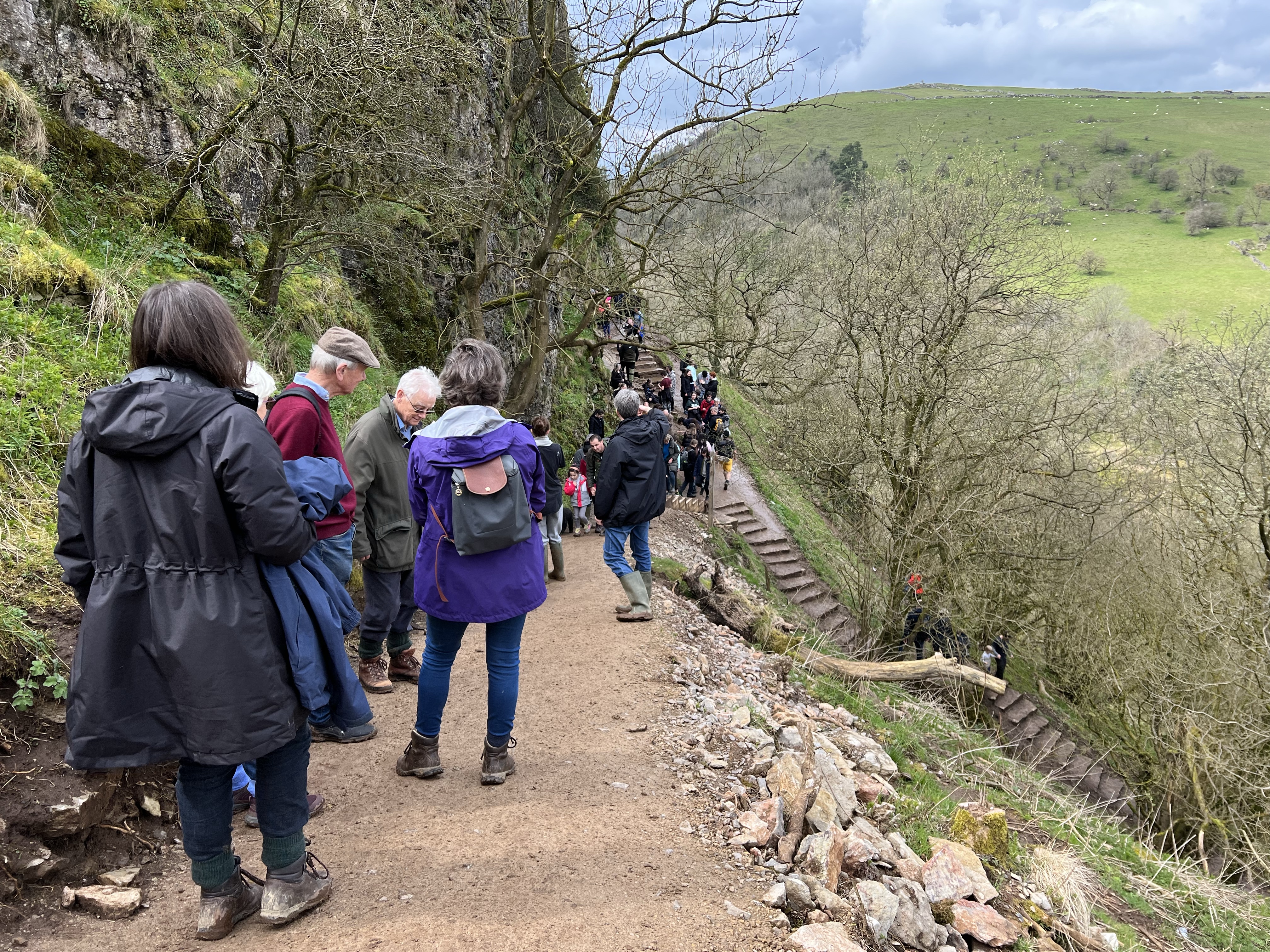
Including Thor’s Cave I’m sure. On an Easter holiday Saturday in 2023 an exercise in crowds and queasy shuddering. The cave is high in the hillside above the Manifold Valley and people crowded and queued around the sloppy mud entrance and stood peering over the edge, taking selfies on the peak above. Teeny bunched figures and no safety rail.

“Oi! Get back! Get back it’s dangerous” I wanted to shout as I know Connor would have, back in the day.

Instead we took a right turn from the path ahead to find silence. A peculiar peak feature. After walking some way along a beautiful rabbit and sheep shit carpeted valley, we reached Wetton Mill and came across a retired teacher from Salford carrying a cardboard figure up the hill below us.

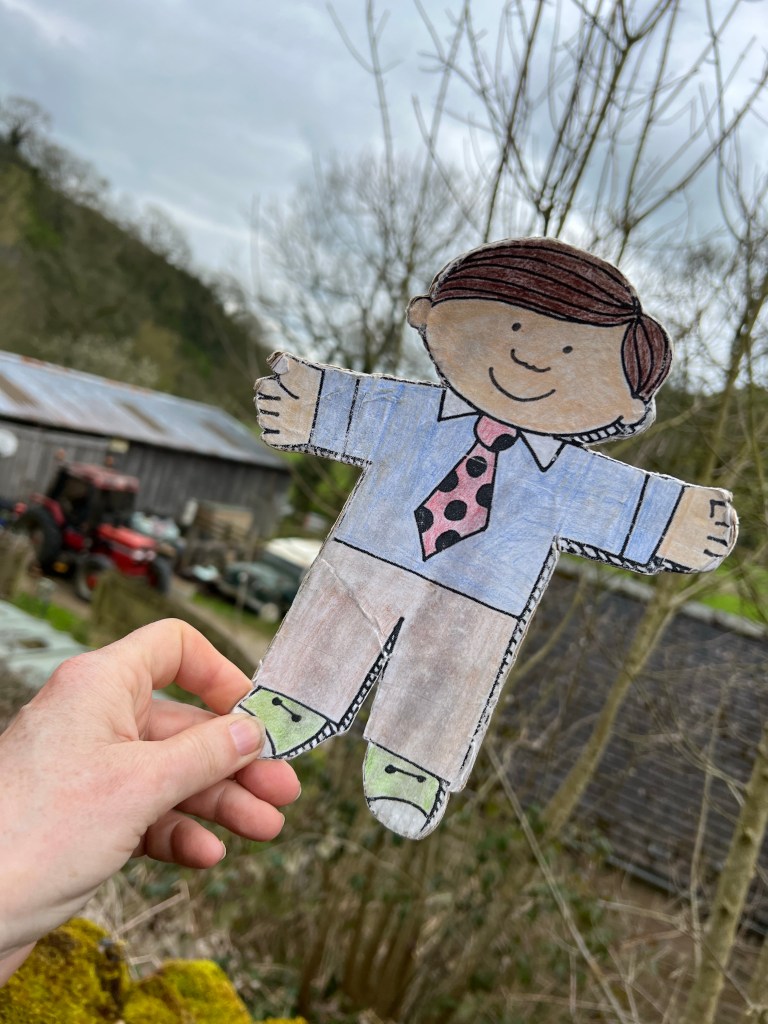
FLAT STANLEY AT WETTON MILL

“Don’t worry I’m not going through the gate!” she called up. “I’ve just got to take a photo of this.”

“What is it?”

“Flat Stanley.”

“Flat Stanley?”

“My American pen friend, she’s dead now, we wrote to each other for decades and I kept in touch with her daughter. She’s a teacher herself now in Dallas. She asked if I’d be involved in this project. So I stuck a bit of cardboard on the back and take him out to photograph all over. I do a bit of research about where the photo is taken and send it to her. The children love seeing where’s he’s been.”

“Wow, that’s so cool!”

“It is, look on Facebook! There’s 1000s of photos.”

There are.

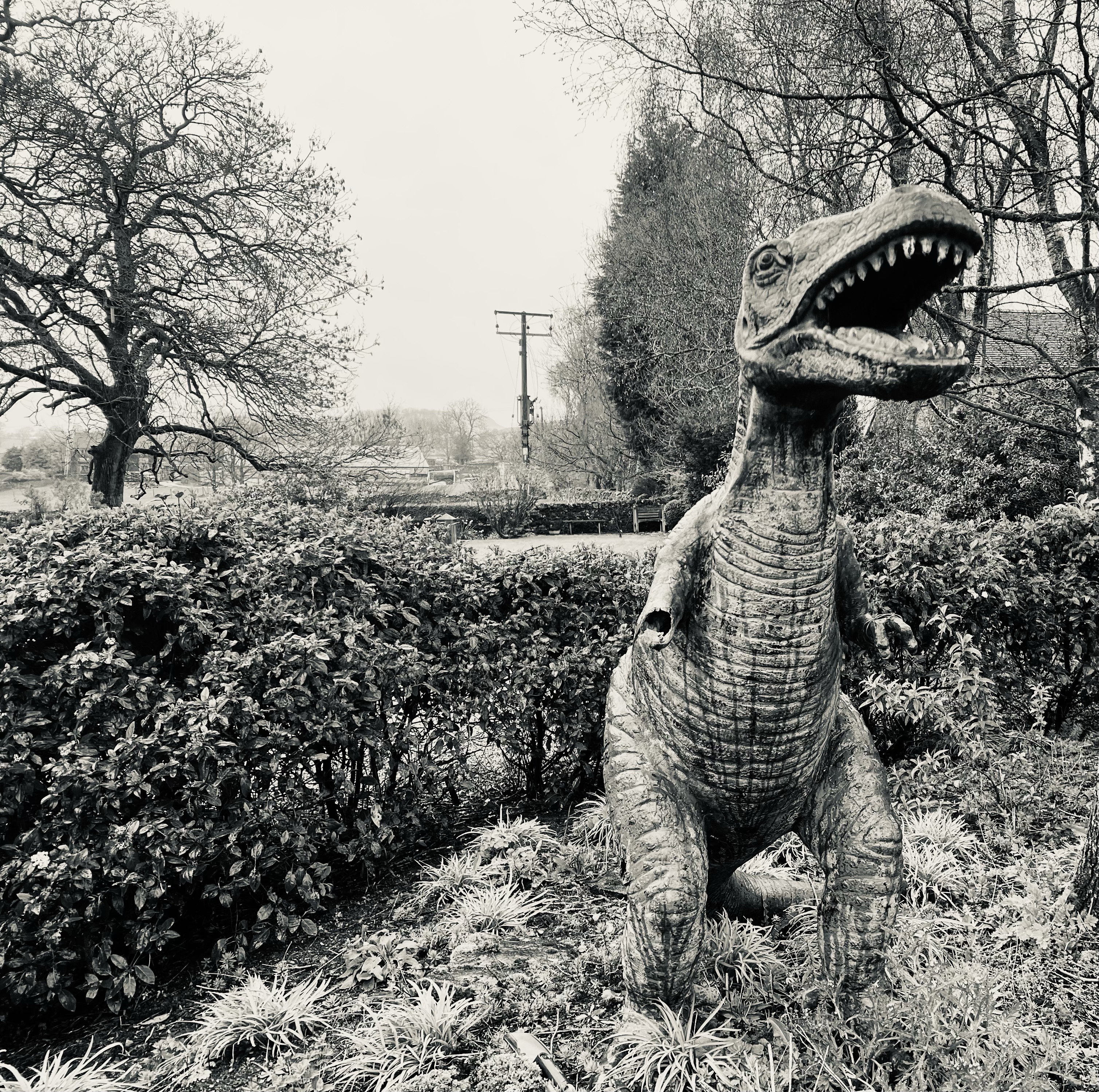
We walked back to Alstonfield, had a cheeky race uphill with a duck in the distance and came across a dinosaur.

PRACTICALITIES: Avoid weekends or go early/late in the day. Minimal parking at Wetton (misery for residents), some parking at Wetton Mill. Lovely walk (top two photos), footpaths and array of stiles from Alstonfield to Wetton (about 1.5 miles) as an alternative (two community car parks with bar code option for donations). Cash needed for the tea room in Wetton and ice cream van below the cave. Sarnies, cake, a good brew and toilets at the Wetton Mill cafe.

‘Eyam a celebrity’

A circular walk from Eyam [eem] to Middleton Stoney earlier. A weekend of leaked WhatsApp messages showing government ministers grotesquely gaming the pandemic.

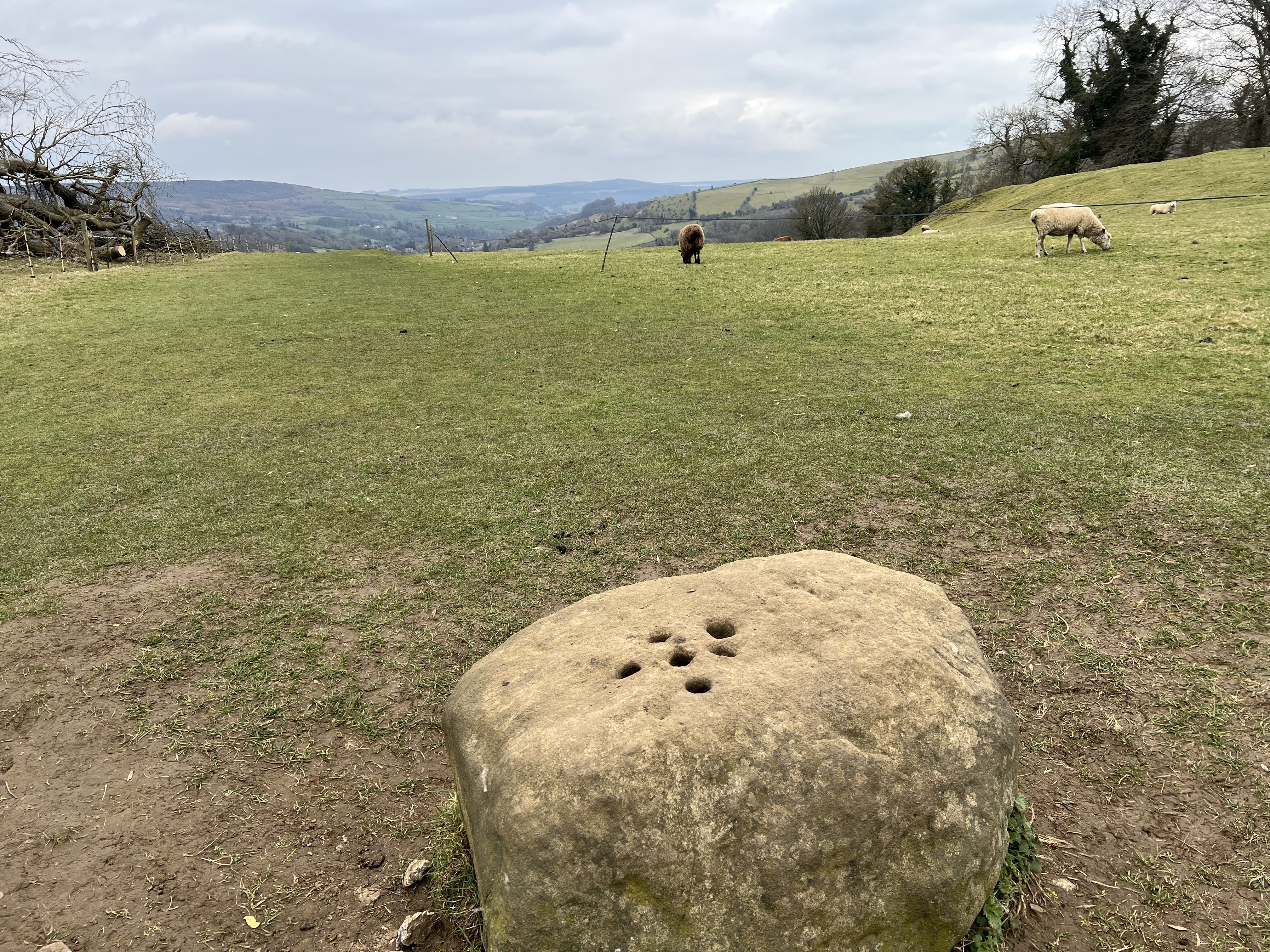
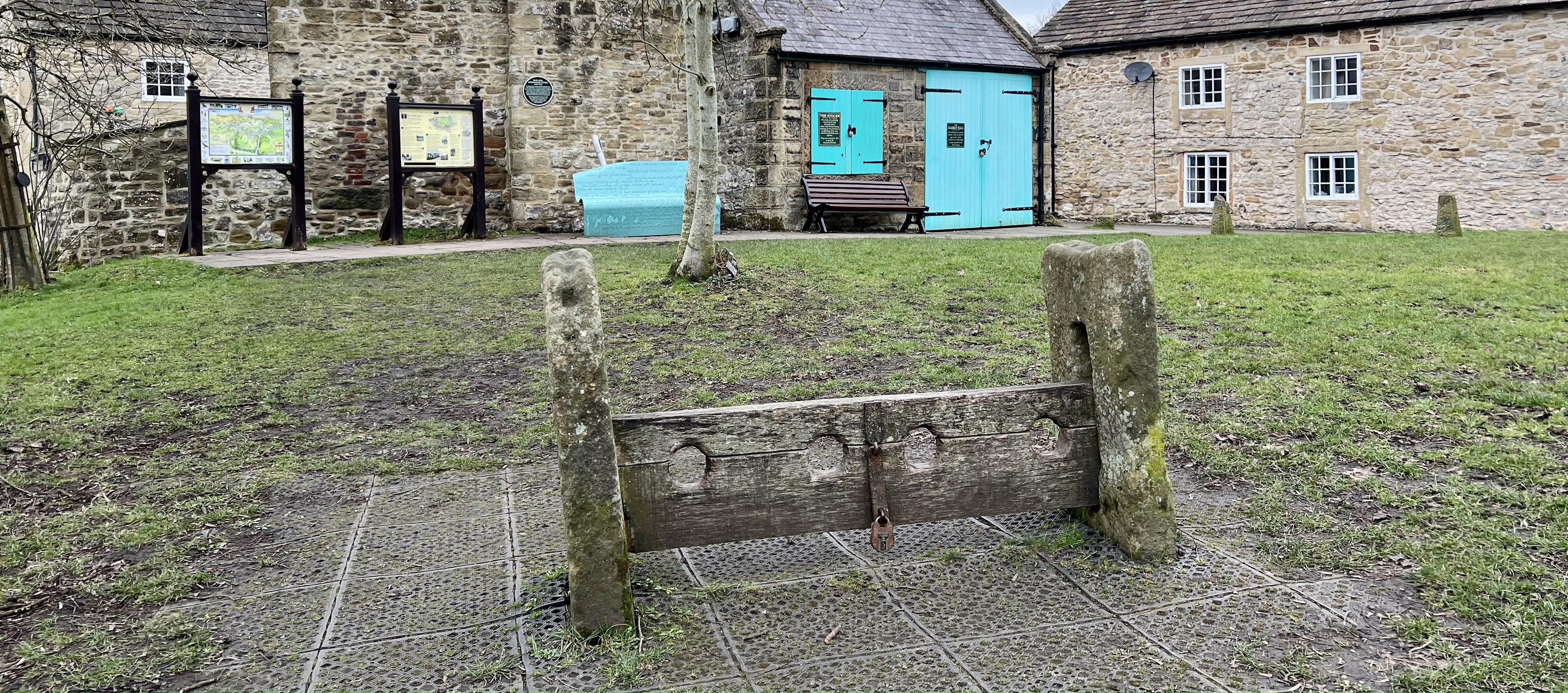
Eyam is the famous Peak District village where residents chose to isolate for 14 months in 1665 after a plague contaminated package was sent to a tailor there from London. Food/supplies were left at boundaries of an exclusion zone, marked by large stones with drilled holes where residents left vinegar soaked dosh to stop infection spreading. The death toll is variously described as 30/50/70% of 300-700 residents.

The loop round to Middleton Stoney is a path of easy beauty, quirkiness and hints of colour.

The ‘Plague Village’

The plague village story is documented in minute detail around the village and into the countryside. ‘Don’t miss the boundary stone with the six holes!’ type signage and other dramatic story boards along the walk. The Riley graves where Elizabeth Hancock buried six of her children and husband on a hillside alone while people from Middleton Stoney looked on in sorrow across the hillside. In the space of a week.

The children’s gravestones were later added to the father’s actual grave in a now National Trust managed site.

Academic Patrick Wallis carefully unpacked how the emergence of the ‘celebrity’ status of Eyam was reconstructed across three centuries and transformed into British heritage through a combination of literary efforts and contemporary events. His research is obliquely reflected in green sign detail around the village that refers to the digging up or destruction of burial sites and stones.

Wallis writes that the story of Eyam emerged so long after the event, that ‘immediate justification of actions against the plague, and the power and reputation of those involved was no longer an issue’. This meant that the story could be largely made up.

These bones have themselves been re-arranged and sometimes added to or discarded, while the flesh of the story built upon them has been moulded into even more varied forms.

In fact, poor residents in what was a mining village were disproportionately affected in mortality figures. Wallis suggests: the rich did a bunk; the ‘self sacrifice’ of Eyam residents was instead a wider 17th century form of lockdown; and there’s no mention of heroic actions by the two church leaders/villagers in any early tourist literature.

Writer Anna Seward’s sentimental and romanticised version of events in the early 1800s, together with a growing fascination with epidemics, created fertile ground for the story to grow ‘in an anecdotal patchwork of subplots’. Villagers were recycling gravestones for flooring before the plague bicentenary created the moment for the story to really take root. Material artefacts were needed to bolster this narrative and the rat infected clothing box was ‘discovered’, plaques were dotted around the village (without evidence or verification of the content) and in 1966 the Mayor of London sent a guarded apology for originally sending the plague to the village.

Public health learnings have been gleaned from the reconstruction of the (largely unknown) actions of Eyam residents (open air churches services and swift burials).

The death toll was clearly heavy whatever the numbers. Nearly 20 years ago now, Wallis ends with a quote from one of the three letters that exist written by Rev Monpesson. He demonstrates more humility in one line than the current offerings (or any comment about the pandemic by the government.)

‘The condition of the place has been so sad, that I persuade myself it did exceed all history and example.’

Practicalities: 3.5 mile well signposted walk. Park in museum car park then walk back to village square to pick up the signpost. Only one sheep sweep otherwise dog friendly. Warm spring, public baths and chippy in Middleton Stoney. Steady ascent up through woods on the loop back to Eyam. Heavy on the byways (another growing obsession).

Cathkill Dale, sinkholes and timetabled cows

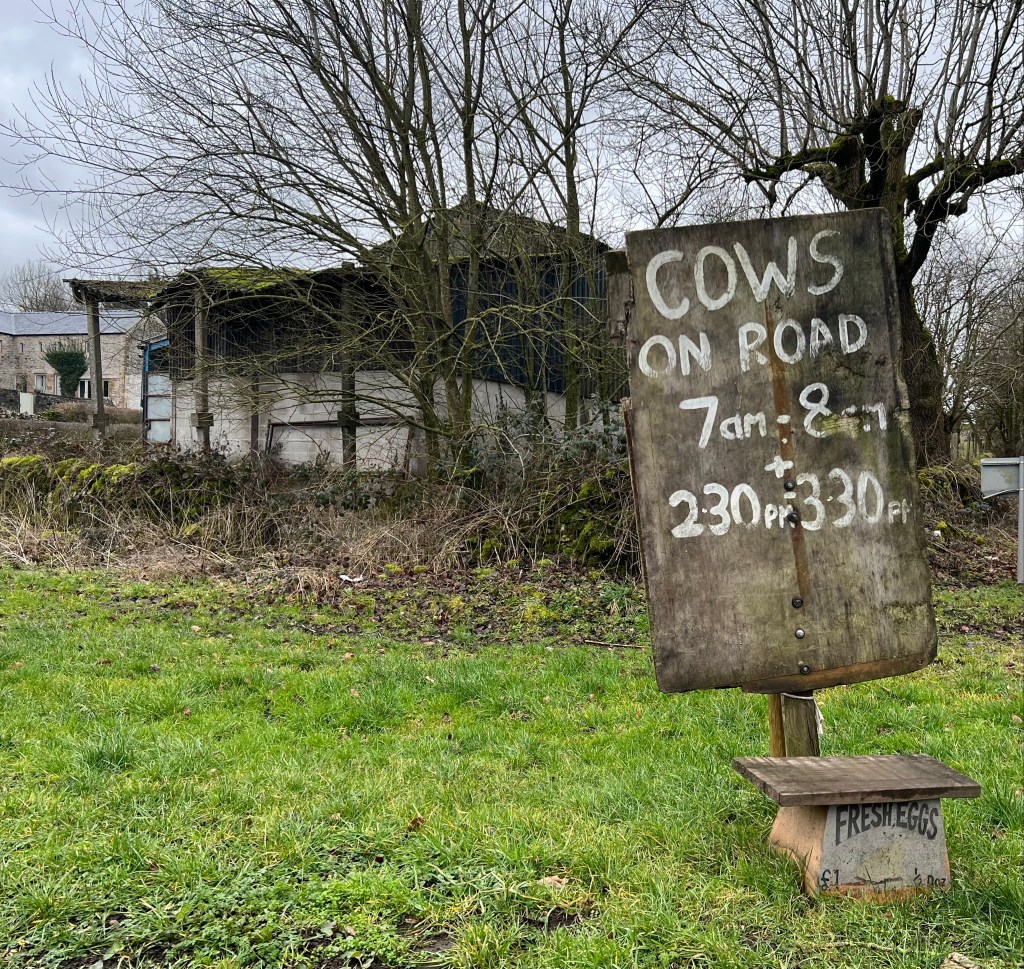
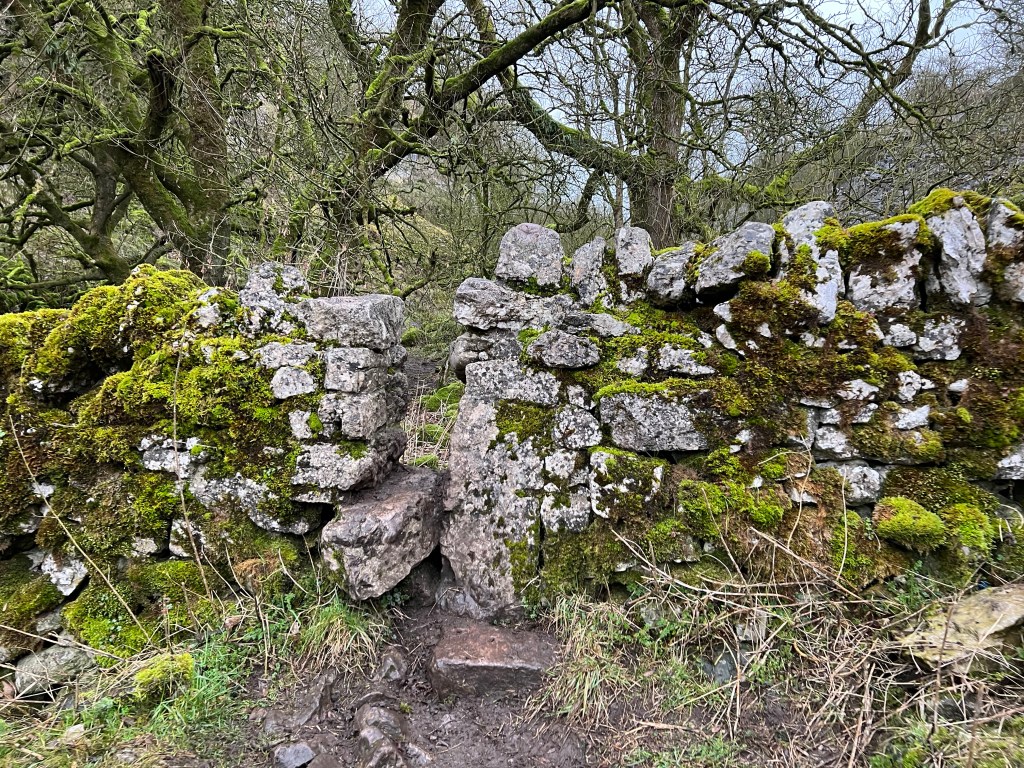
A funny one today. A 10 mile loop from Monyash, across numerous fields and stiles. Stiles. Squeeze and step – just working this out…squeeze a narrow stone post space though the wall. Step, slabs built into dry stone walls to climb up and over (right handed in layout). There was manicured scenery at the start: orderly village; neat phone box library (with a squeeze stile) and timetabled cows.

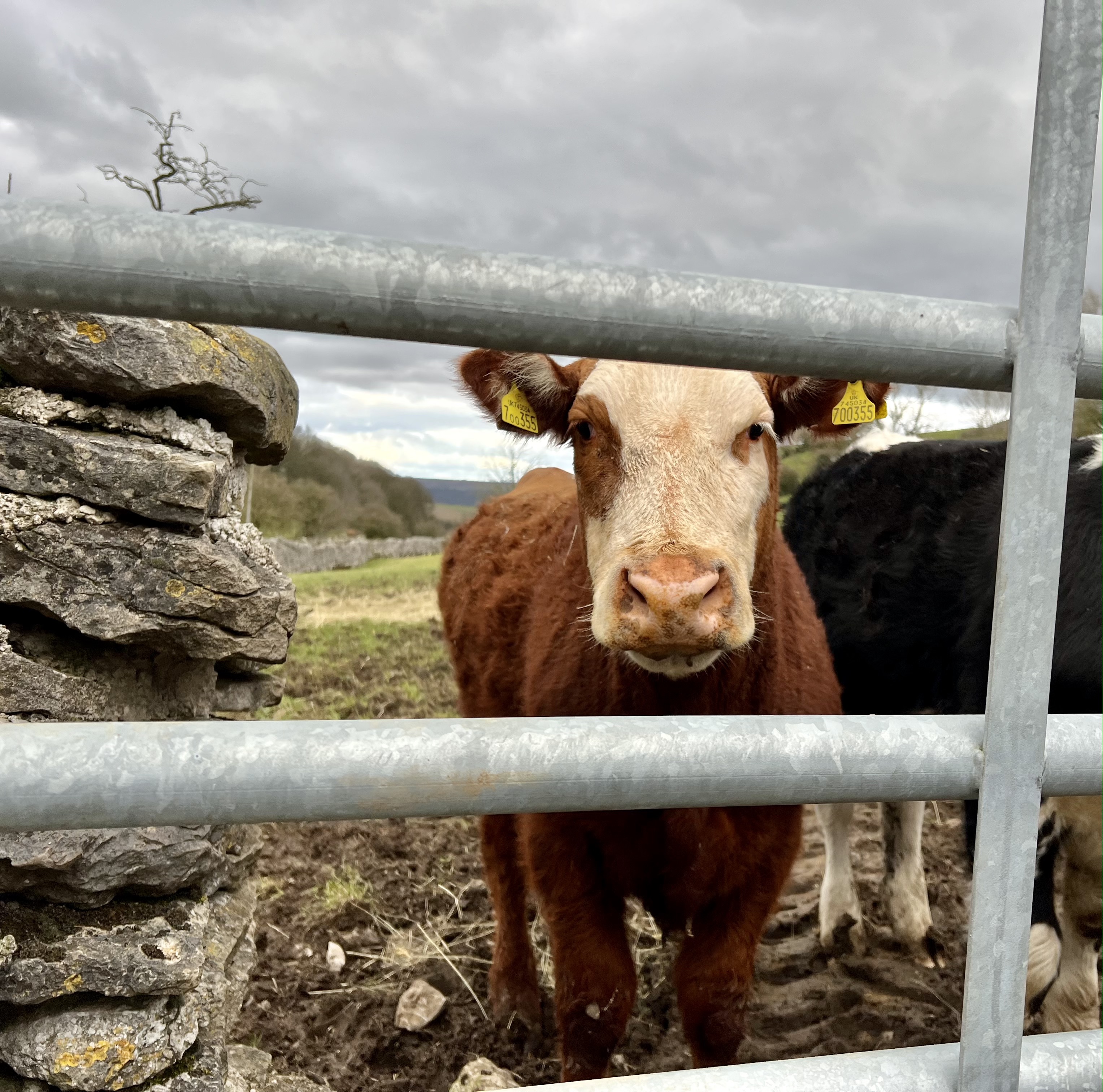
Changeable weather en route, a nativity scene and more unusually, cows. Love how the baby cheesus features more than cows on this blog. There was also a 90 degree stone staircase up the side of the valley which was a bit hairy with the Sidstar.

The walk took an interesting turn at the far end of Cathkill Dale. I mean, just look at these photos…

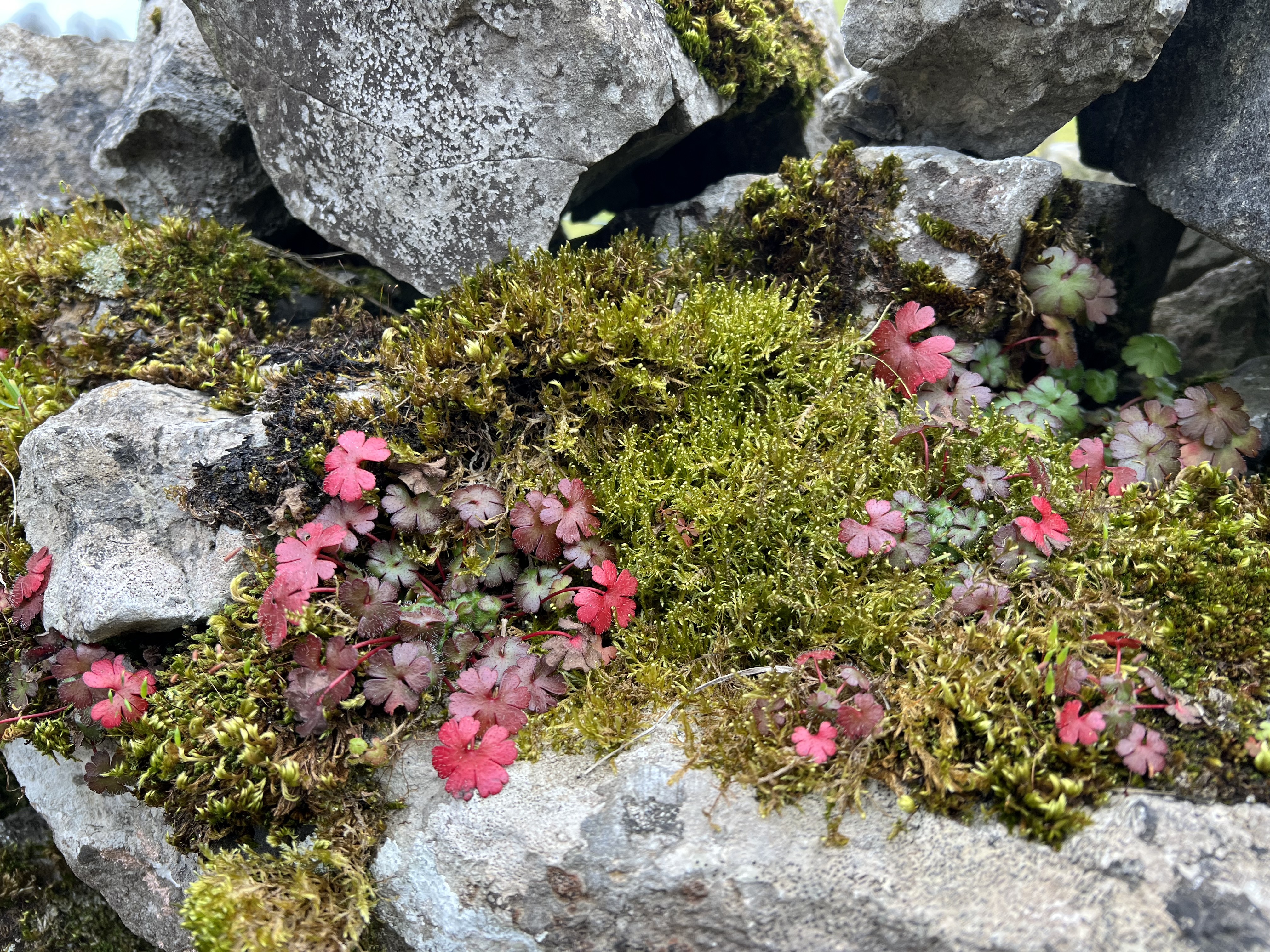
An eerie, waterfall and cave dotted path starts wide and accessible before entering a fairlyland of scarlett elf cup mushrooms and dense moss coated trees and boulders. There are two fenced off ‘natural’ sink holes where the overflow river water runs into a different channel under the river bed. The only kind in the country. And people made features as per.

In the Bulls Head pub after there was a buzz, good nosh and natter.

“I were born and bred in Monyash. We live in [Derbyshire village] now. Tiny place, middle of nowhere. My wife, she’s only just become deaf. I’ve been deaf since I was born. I can lip read, she can’t. We come here a lot to walk around and eat in the pub. Good food and drink here.”

“The pub is too noisy, there’s too much background noise.”

“Are you visiting the area?”

“No, we live in Buxton?”

“Buxton is cold, we lived there 12 year. It were cold. Where in Buxton?

“Brown Edge…”

“Ah, my sister lives there. Opposite the care home. Number 2023.”

Practicalities: Not sure about public transport, village car park and some road parking. Mixed dog walking in terms of on/of lead. Sid learned to manoeuvre step stiles on this walk so more on lead than off. Cathkill Dale is a nature reserve, dogs should be kept on a lead and not enter the water. Bulls Head pub does a good range of nosh with variable opening hours.

Jacobs Ladder, Dylan, Dougall and Brian

Day 5/18 of UCU strike days and the sun was shining. A good day to walk off work angst in the Edale Valley (or above it). A walk in three parts.

1. Up

Set off along an idyllic valley, wide path, easy on the upwards, parallel to a stream.

The path and stream eventually merged and became a random sized boulder hewn, waterfall drenched clamber up. And up a bit more.

There was the odd person/people ahead and behind in the distance. A woman was clambering down.

‘Is it worth it?’ I asked, peering up at what looked like a cliff face.

‘Mmm.’ She thought for a moment then said more definitely, ‘Yes, yes it is. I’m just starving. I didn’t bring any food.’

Food? Now there’s a thought. [Gulp]

At the top the landscape was transformed. The sun had gone, leaving peaty, dark, forbidding and stunning.

2. Across

Across the top were flagstone paths and eery rock formations. ‘Be careful in the mist’ warned the book. It wasn’t misty and easy to get lost as paths disappeared between boulders and intermittent flagstones. Some looping the loop, wearing out Sid.

‘Eh, I think I’ve seen this rock before…’

A man appeared in the now rainy and almost misty terrain. A sassy and chunky corgi type dog with him reminded me of Stan and the Peepy Thing.

‘We’re trying to find the Pennine Way back down to Edale…’

‘Ah, you’re doing the opposite way round. Just follow that path straight up there, you see those people in the distance? There’s a left turn that meanders down to the valley.’

3. Down

Down was as spectacular as up and across. Just different. Taking in Jacobs Ladder (the path down to the bridge below), a few cairns and more of a rolling valley feel.

At the bottom, a tiny nativity scene in a stone alcove by a farm. Dylan, Dougall and Brian had pitched up packing that Peak District punch.

And the sassy corgi was already back in Edale.

Practical stuff: Train station or pay and display car park in Edale. (No phone signal to pay online so cash needed.) Dogs can be pretty much off lead the whole way (depending on their temperament and ability not to leap off massive rocks into space.) The clamber up is quite something though a quick google suggests alternative routes up.

Snackage is probably a good idea (!) The Nags Head, open Weds-Sun, has a good set of nosh options including various sausages, mash and sauce.

Lose Hill and Windy Wappins

New Years Day, woke with a rainbow over Lightwood. Late morning was a walk up to Lose Hill and part way along the Great Ridge from Castleton.

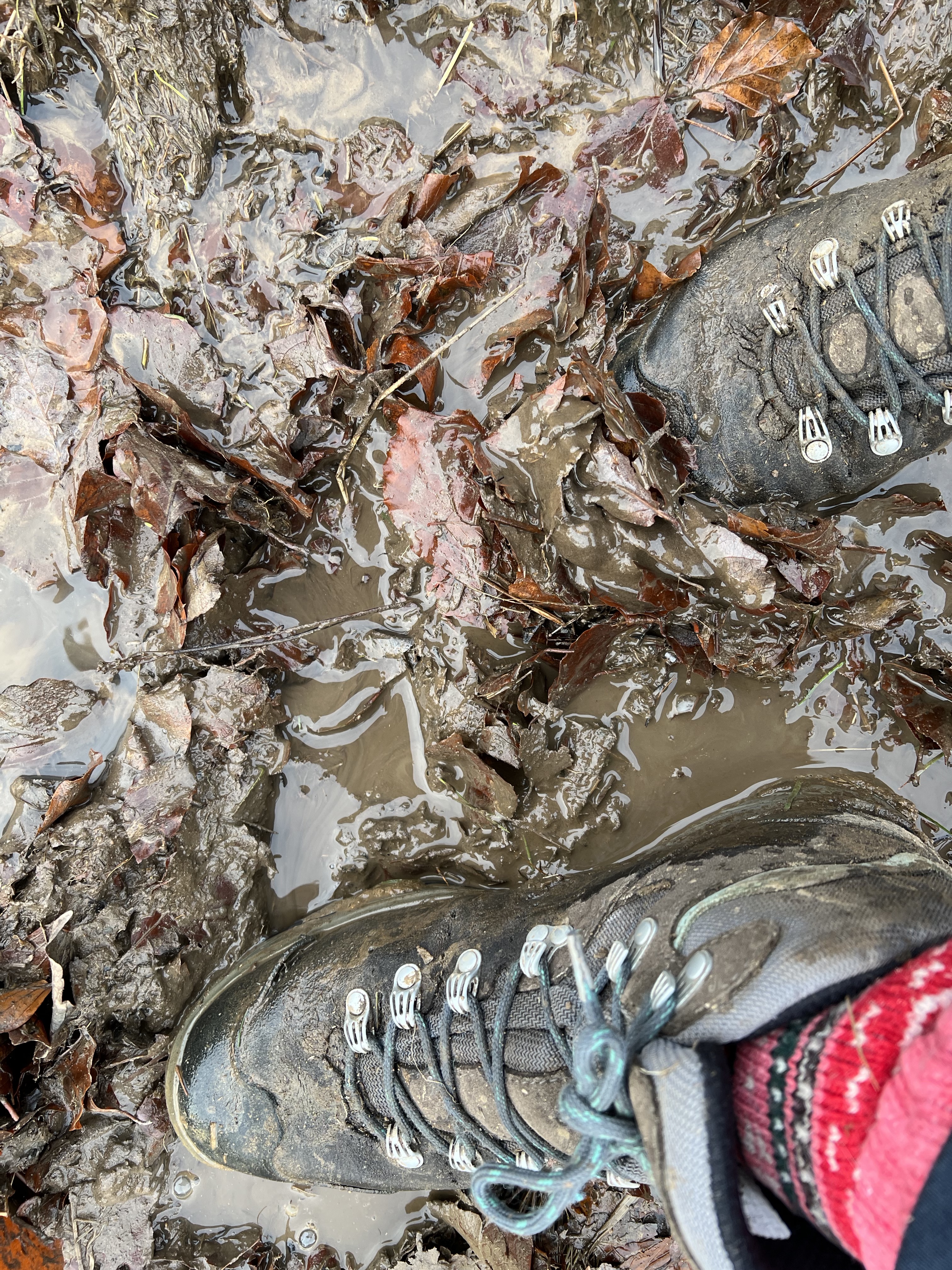
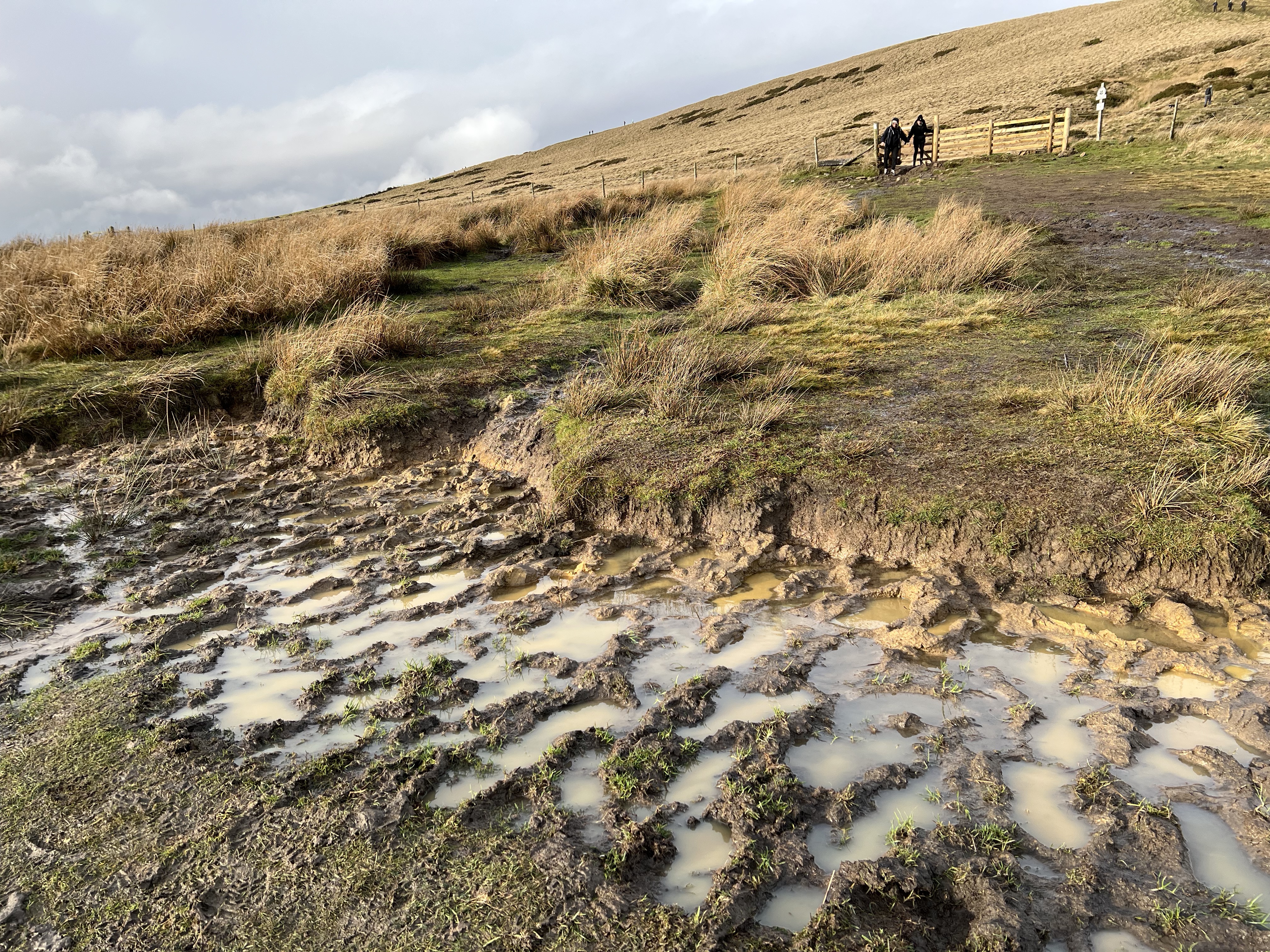
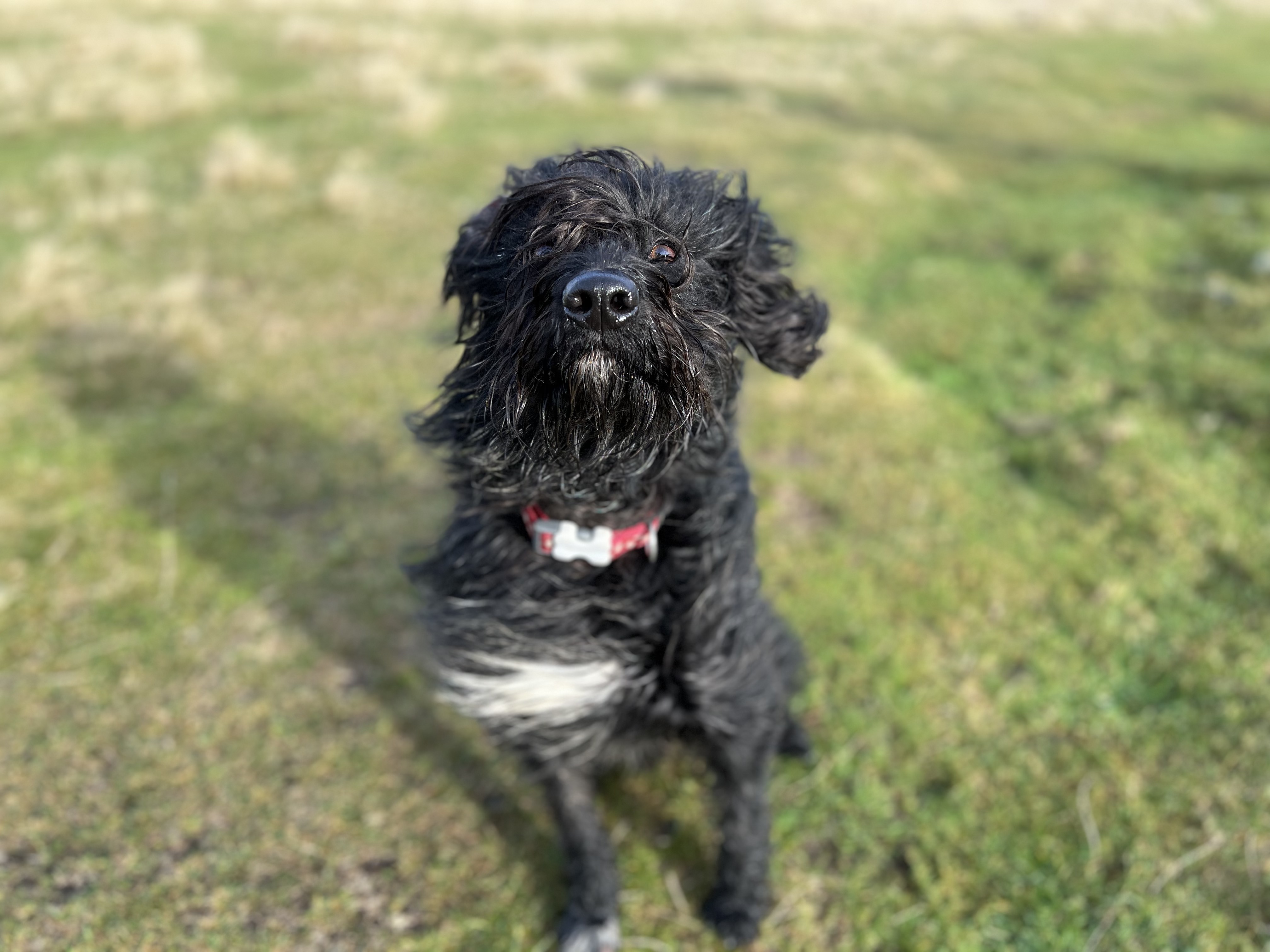
It was a muddy kind of day with a fair bit of slip sliding away on the way up. Proper windy too with mild peril to Sid’s chest fur and left ear.

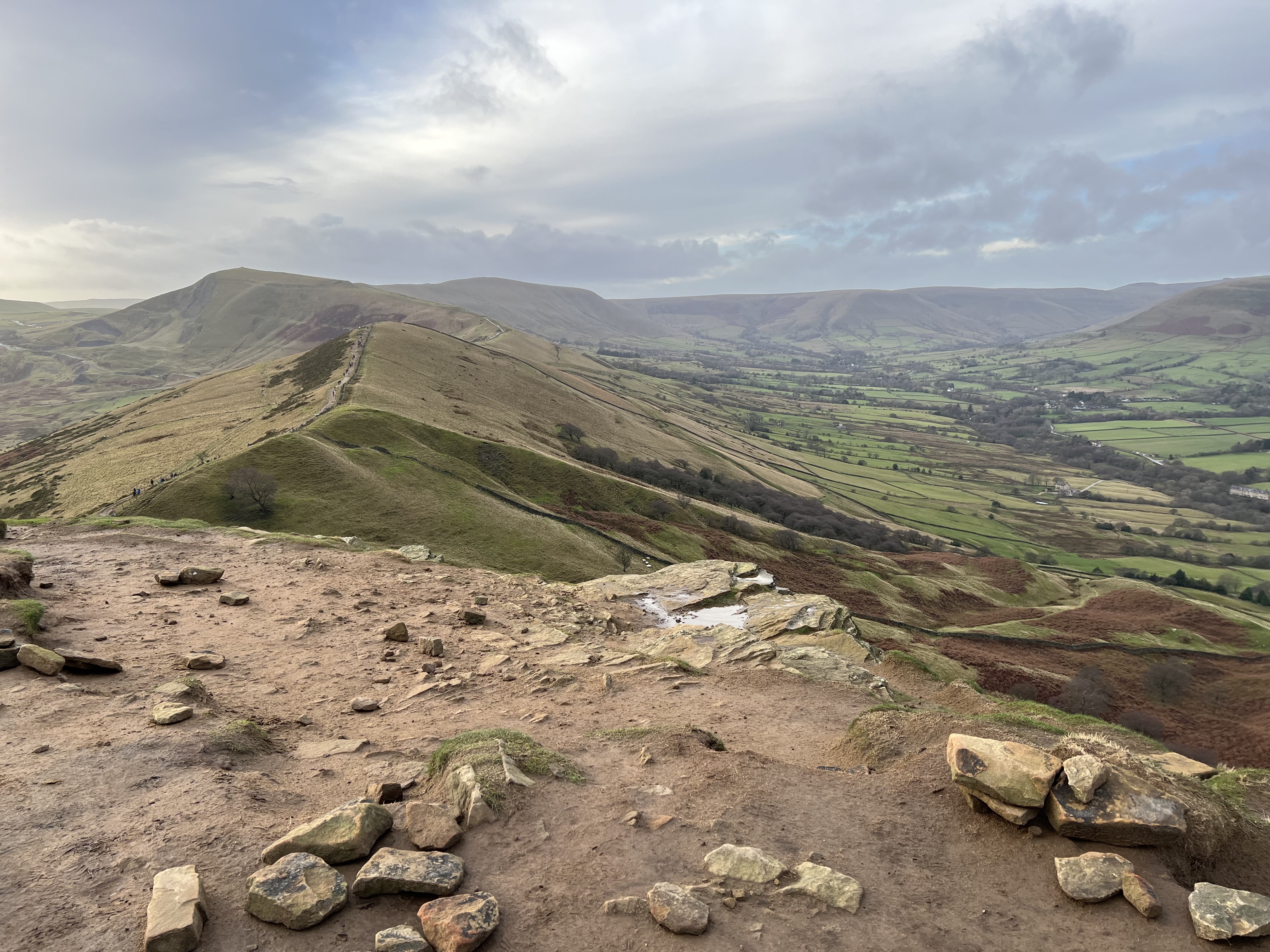
Worth it mind. The ridge separates Hope and Edale valleys and the views are spectacular. More handy flagstones lead to Mam Tor at the far end and the sun pitched up to shine the way.

First bit of 2023 learning was about Windy Wappins, Breedy Butts and medieval topography remnants. Who knew?

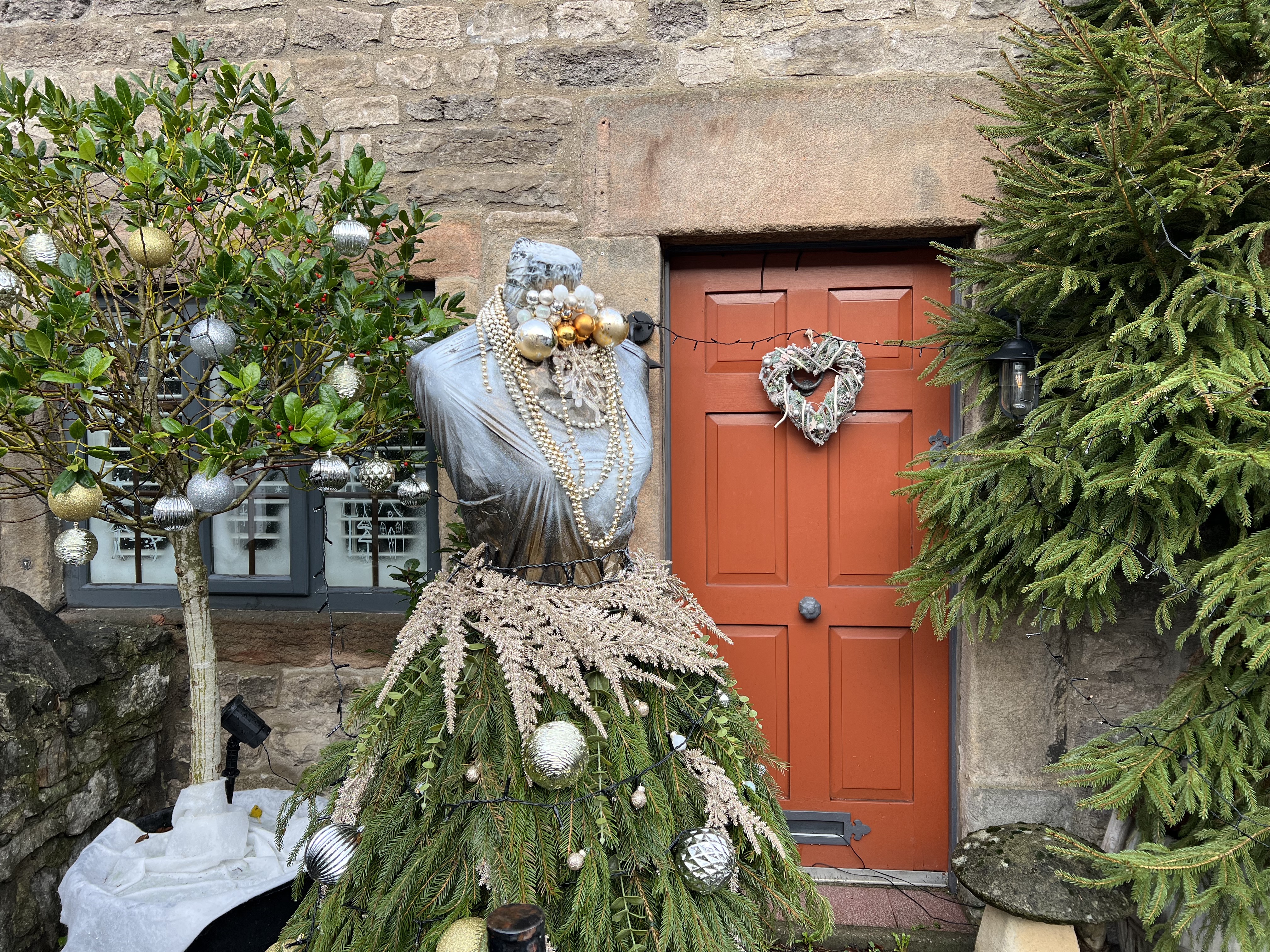
Back in town, Castleton was winning Christmas style.

And it was fall back in time time at Castleton Garage where the owner was having a cheeky read of ‘Light Car’.

“Do you mind if I take your photo?”

“Er, no.” [Chuckles]

“You just look so at home in here.”

“That’s because I’ve been here forever.”

POSTSCRIPT PRACTICALITIES: Sheep every which way on this walk so dog on a lead.

Shining Tor, rainbows and the radio antennae

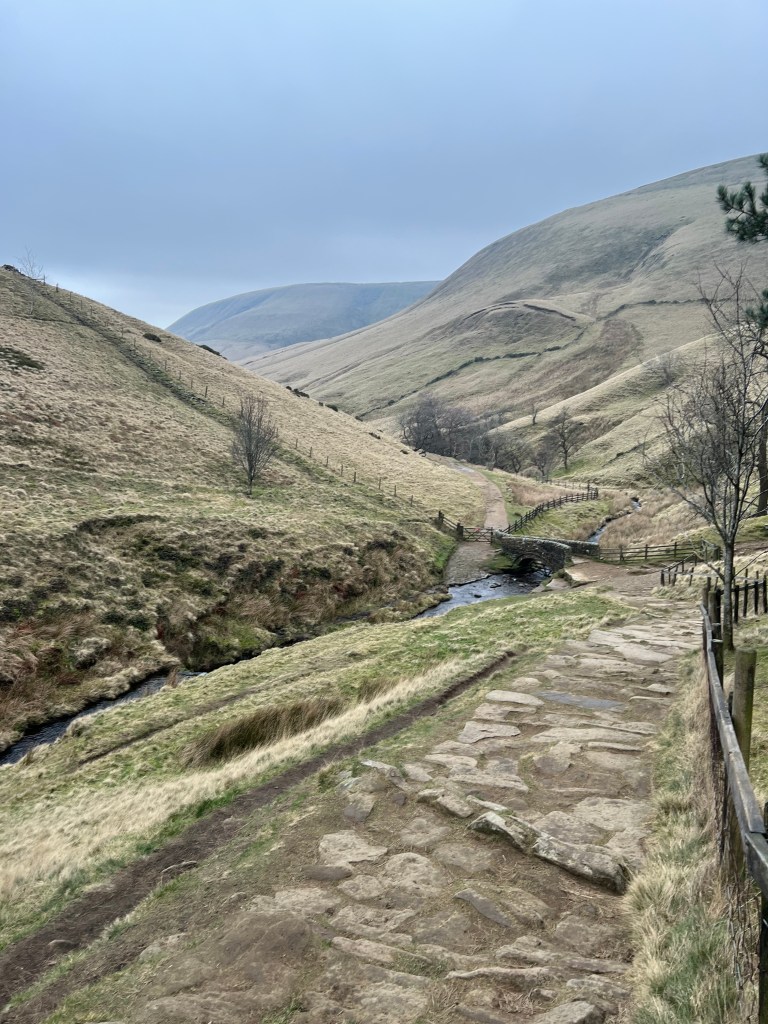
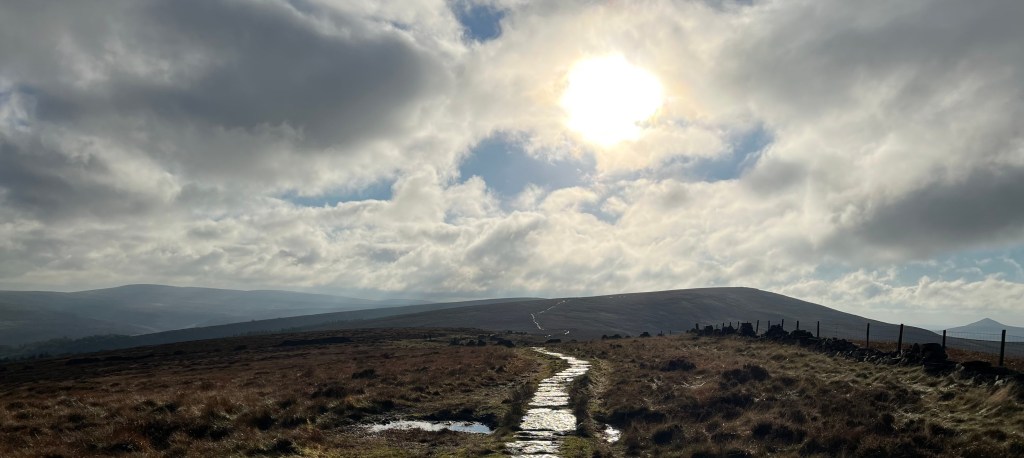
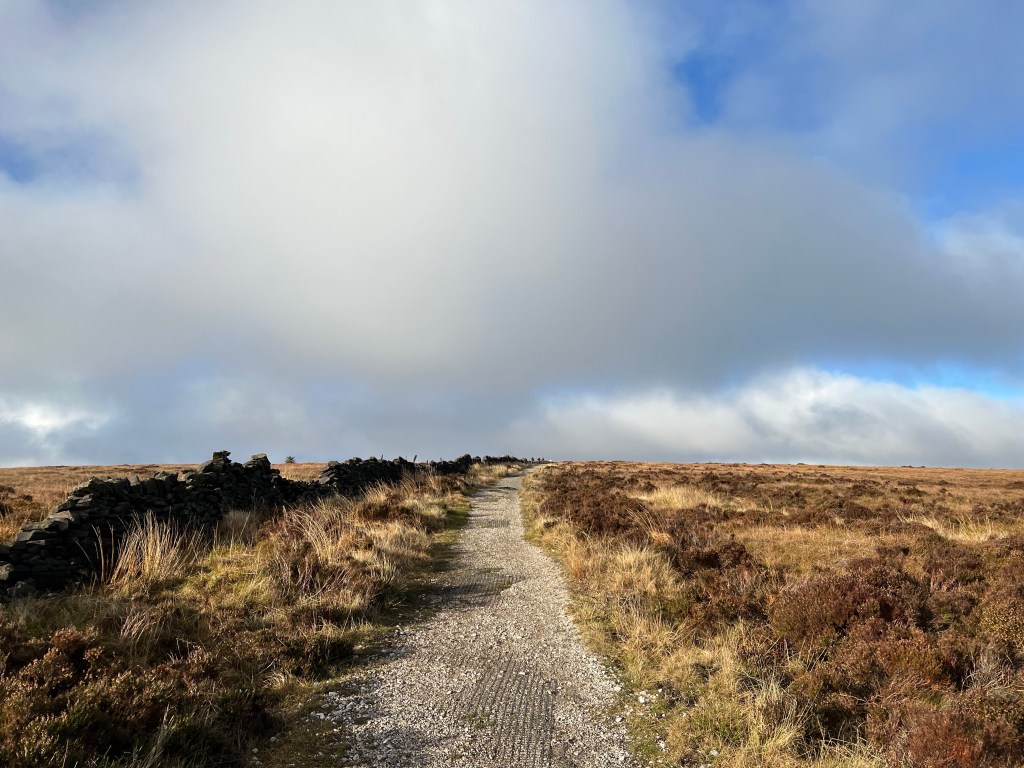
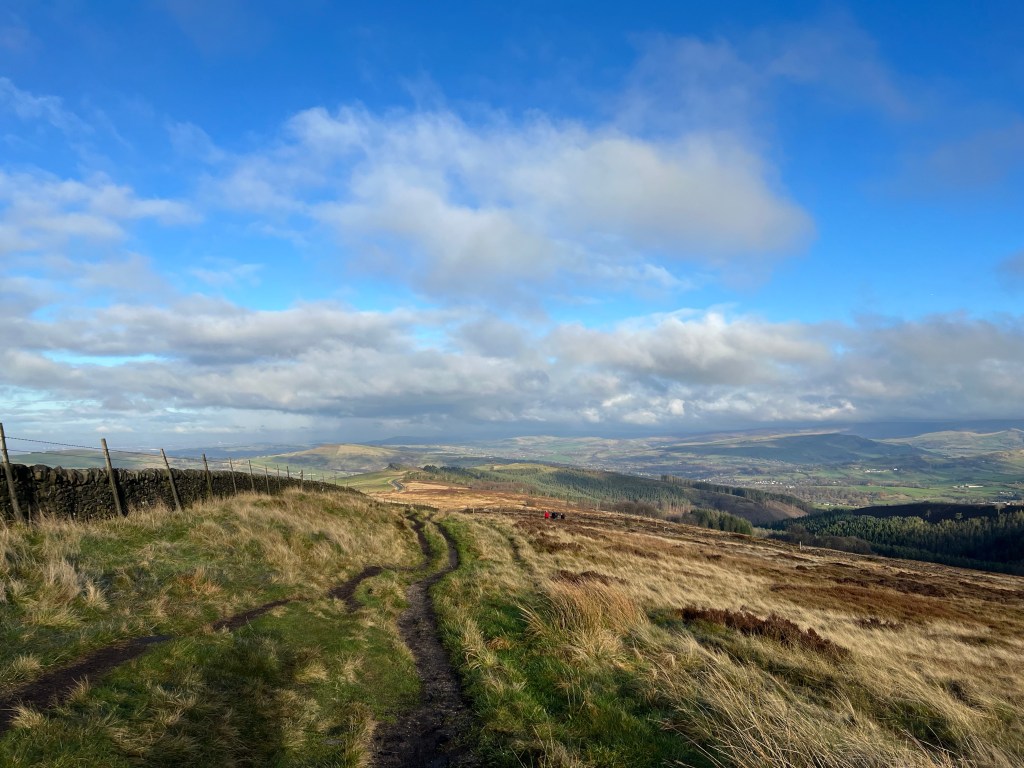
Back to Shining Tor today, 2 miles from Buxton in the Goyt Valley. A steady ascent to 600 metres on a slabbed path apparently airlifted from abandoned mills in the Pennines to save the environment being ruined by walkers. The views along the way take in pretty much every Peak in the Peak District, Manchester, Cheshire and further with some blisteringly clear moments and the odd rainbow.

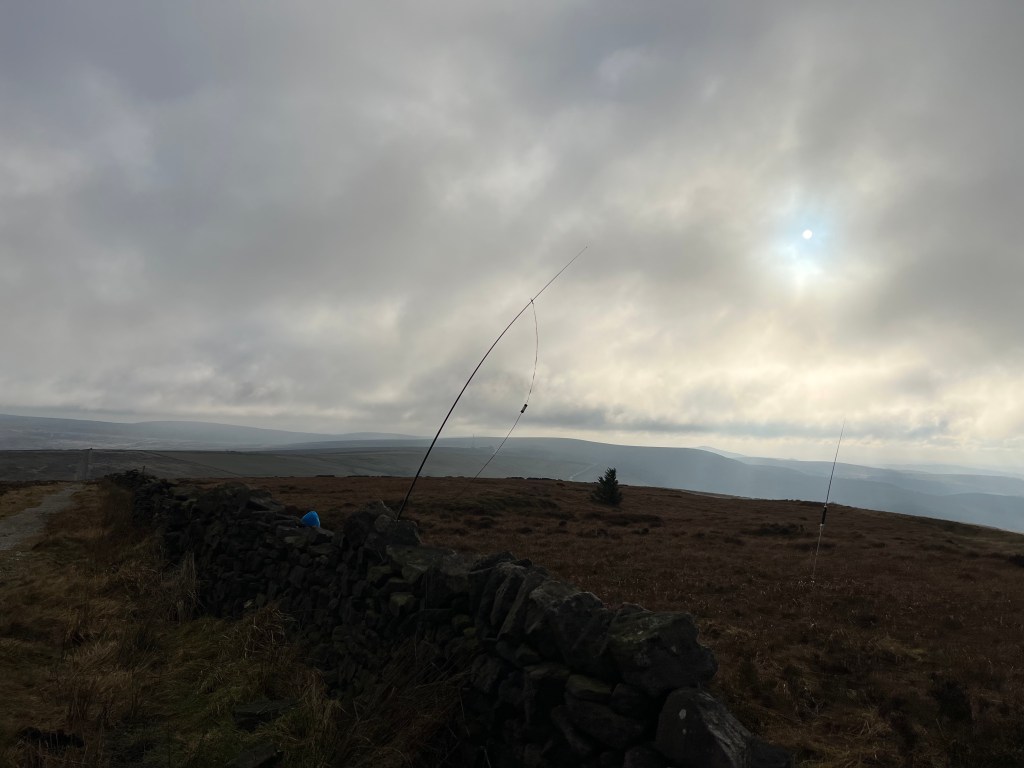
Weather was a bit changeable with freeze your socks off stuff at the top. At the trig point by the dry stone wall was what looked like a large fishing road and a shorter pole stuck in the ground a few feet away.

A man was huddled behind the wall bundled in clothing with an array of equipment laid out on the ground next to him.

“Morning, do you mind me asking what this is?!”

“Amateur radio. I’m chatting to people on the top of other mountains. It’s been my hobby forever.”

“Wow, what other mountain tops?”

“Right now Portugal and Greece, it’s not such good conditions today though. I was up here on Tuesday, just above the cloud and I was chatting to someone in Australia. You’d be surprised, there are always people on mountain tops around the world chatting to each other. Mostly nerds like me!”

This is possibly my favourite Peak moment. Just imagining people on mountain tops, randomly chatting to other enthusiasts across the world.

The circular walk continued across to join a sweep of a path that goes from the Errwood Reservoir to the Cat and Fiddle distillery halfway between Buxton and Macclesfield. The sun came out, Sid ran out of dogs who tried to savage him and it was back down to the start.

Leave a comment